Anna Cates’ Dreamsicles

THE HAPPY GUY

Shopping for orange dreamsicles at Dollar Tree, I found myself in the checkout aisle behind two young men, dressed like handymen. The one closest to me suddenly declared, “I love you!” to the cashier, a large, middle-aged woman with mousy hair.

“He always embarrasses me,” the other guy laughed.

“Why shouldn’t I say something positive?” the man defended himself before turning to me. “I love you!” he said, a sincere smile on his face.

“I love you too,” I replied with a grin.

I left the store with my dreamsicles, thinking how it isn’t every day that two complete strangers look each other in the eye and say, “I love you!”

a daisy’s
yellow joy . . .
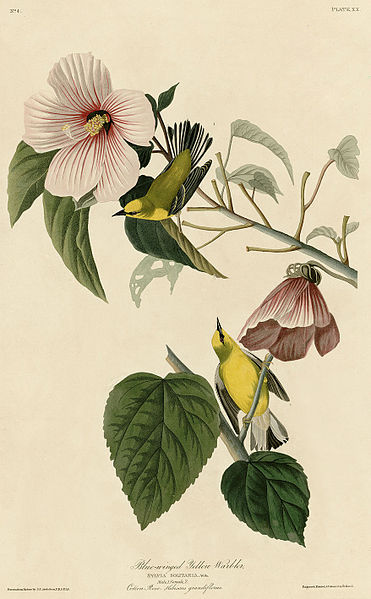
warbler trills

© Anna Cates (USA)

It seems the idea of this haibun is to make readers think about themselves and about today’s people. What does it take today to be human? It is very complicated. You smile and a guy thinks, “she is hitting on me.” A man gives you compliments and you begin having wrong ideas.

The prose part in the haibun is very clever and good. In my opinion, this haibun could have two more haiku: one after the description of the cashier, and one more after the guy said I love you to the other guy.

Laughing Waters (USA)

This haibun is versatile in many ways, as I can see various elements of our daily thoughts, the shopping spree, chitchat with people where we exchange smiles, and helping out strangers—the strangers we are connected to strongly for our needs, for our daily requirements.

I liked the way the poet composed the prose in a delightful way, which basically tells us about the dilemma of human beings. We usually bring our conscious filters when someone chats with us unexpectedly in a friendly way. In this era, if people try to connect with each other publicly, it is almost always taken in a suspicious way.

The haiku part of this haibun is well embedded with the emotions of a person who really wants to feel a deep connection with strangers, who are none other than human beings. The soft trilling of a warbler depicts the sincere and lovely feelings of a person that she/he shares through words like ‘I love you!’. But, we perceive it according to our mindsets and in a specific way. Unfortunately, we want to connect with each other as human beings but, we cannot, as we start defining every single gesture, feelings, and words and categorize them according to our set perceptions and experiences. But, deep down, we want the opposite—we want to be heard by others, we want to be accepted unconditionally by others, we want to be connected without any barriers, and we want to be appreciated by others. All this is just a simple wish we want, like a daisy’s yellow joy—the center of it—and in our case, the heart that is the center of joy, that usually fades away due to our thoughts and perceptions.

Hifsa Ashraf (Pakistan)

I like the realness of this story, and also its uncommon situation. When I read the prose, I could tell right away it was from reality. I have also been in similar circumstances when people in public are goofing off or acting in a unique way that is positive. It gives a certain vibrancy to life.

Besides being able to easily identify with the story, I like the slightly surrealistic haiku accompanying it. It connects nicely with the unusual, but very ordinary occurrence in the story.

Touching upon the technical stuff, the ellipsis works well to illustrate the warbler’s trill. I also enjoy the economy of the language, with the haiku being only six words. The rolling of “l” sounds and “y” sounds make the poem musical as well.

In terms of the prose, I enjoy the descriptions of the people and the naturalness of the dialogue.

A haibun that explores the extraordinary in the ordinary in a delightful way.

Nicholas Klacsanzky (Ukraine)

Did you enjoy this haibun and commentary? Please leave us a comment.
371px-Blue-winged_Yellow_Warbler_(Audubon)

John James Audubon (1785–1851)

Michael Smeer’s Anniversary Dinner

anniversary dinner
i tie together
dad’s shoelaces

AHS Winter Solstice Haiku String 2018
© Michael Smeer (Netherlands)

This week’s poet is the creator of both the “My Haiku Pond” blog and the “My Haiku Pond Academy” group. We recommend these sites as great places of learning and feedback.

Now, let’s get to the commentary:

This heartfelt senryu has two elements due to the choice of words, which provides curiosity to readers.

An anniversary dinner here may be the celebration of a parents’ wedding. So, here I can see this as a matter of deep pain where one spouse is being missed (due to death, separation, or illness). The child may have tried to make this event a special one for the father, who seems to be very old. With a deep emotional state of mind, the son couldn’t figure out how to tie dad’s shoelaces. Shoelaces here symbolize the relationship that is quite messy due to different reasons, and could be a metaphor for the child’s wish to see his parents in a perfect relationship again. Shoelaces tied together indicate confusion, ambiguity, and/or remorseful feelings that may result in a perplexed state of mind and actions.

The other side of this senryu could be full of life, where parents and children are together to enjoy the celebration of an anniversary and play pranks on each other—like shoelaces being tied together in this case.

Hifsa Ashraf (Pakistan)

In response to Hifsa:

I also interpreted like you, except that I thought (in a lighter vein) that the son tied up both the laces in order to stop his father from running faster.

Arun Sharma (India)

Hifsa nailed this and I can’t seem to add more to what she saidespecially about the possibility of a prank. “I tie together dad’s shoelaces” says it all. If the word “together” was omitted in the phrase, then it would be more open for interpretation. For example, perhaps his dad was too old to tie his own shoelaces and his son did a good deed. Again, it’s still open to the interpretation of a prank as well.

Fractled (USA)

What I see here is the naughtiness of the subject… tying “together dad’s shoelaces” could be construed as tying the laces of the two shoes together.

Perhaps the subject sneaked under the dining table. I see him as specially dressed because of the memorable occasion of an anniversary. And having that devilish grin of a naughty child, proceeded to tie the laces of his father’s two shoes as others enjoyed in partaking in the bounty of an anniversary dinner, perhaps with a huge turkey at the middle of the table and champagne on the side… a special casserole, some cake, and what have you.

Willie Bongcaron (Philippines)

Much has been said about the content, but I would like to touch upon the technical aspects of this senryu.

Senryu commonly don’t have kireji (cutting word), which are represented by punctuation in English. The poet rightly did not insert punctuation due to this.

Also, notice the economy of this poem. It only has seven words, but it has a significant impact on the reader and provides a potent mood.

The format of the lines are not the “traditional” English senryu structure of a short first line, longer second line, and a short third line. However, not only are senryu more free in structure, but it does not matter so much—especially since the economy of the writing is high.

In terms of sound, a musicality is brought into the haiku with a string of “i” letters and may even portray the stress of tying the shoes together. There is a bit of rhyme in the first and second line with “r” sounds, but the strong “r” in the first line and the soft “r” in second line do not make it a heavy rhyme. We generally avoid rhyming in haiku and senryu, but sometimes if it does not push too hard against the reader, it is fine.

An efficient senryu that exudes a strong mood and a keen sense of musicality.

Nicholas Klacsanzky (Ukraine)

Did you enjoy the senryu and commentary? Please let us know in the comment section.

Mark Gilbert’s Ceiling

chemotherapy
those tiny imperfections
in the ceiling

© Mark Gilbert (UK)
Prune Juice, #22, July, 2017

I enjoy the distance between the two parts of the poem: the chemotherapy, and the imperfections in the ceiling. It is just enough separation to create a spark in the reader’s mind. One mistake haiku and senryu writers can make is having the connection between parts be too near or too far apart. This senryu illustrates a fine balance between the two.

Chemotherapy, as you probably know, targets cancerous cells throughout the whole body, unlike radiation and other therapies. This drastic approach is sharply contrasted with the tiny imperfections the poet sees in the ceiling, probably in a hospital waiting room.

The act of noticing these marks in the ceiling has several concepts behind it: it can be an act of thoughtless awareness, it can be the feeling that a small issue can turn into a big problem later, and it can be envy for the minuscule problems of the inanimate compared to human beings. Perhaps, there are other interpretations as well.

The metaphor of a ceiling is stark to me, as cancer patients may feel that their world, or “ceiling,” is crumbling on them. The barrier between Earth and the heavens (sky) becomes less and less definite.

In terms of sounds, the “p” and “i” letters in this senryu seem to be the most prominent. The “p”s in “chemotherapy” and “imperfections” add a punch to the reading. On the other hand, the “i”s in the last two lines make my attention more acute towards the stated image.

Directly from real life, and from a difficult situation, the poet has expressed much in a understated tone, befitting a fine senryu.

– Nicholas Klacsanzky (Ukraine)