Several one-line haiku by Alan Summers

We have a special feature this time around. Here are several commentaries on one-line haiku from Alan Summers’ new book, modŏ – new & selected.

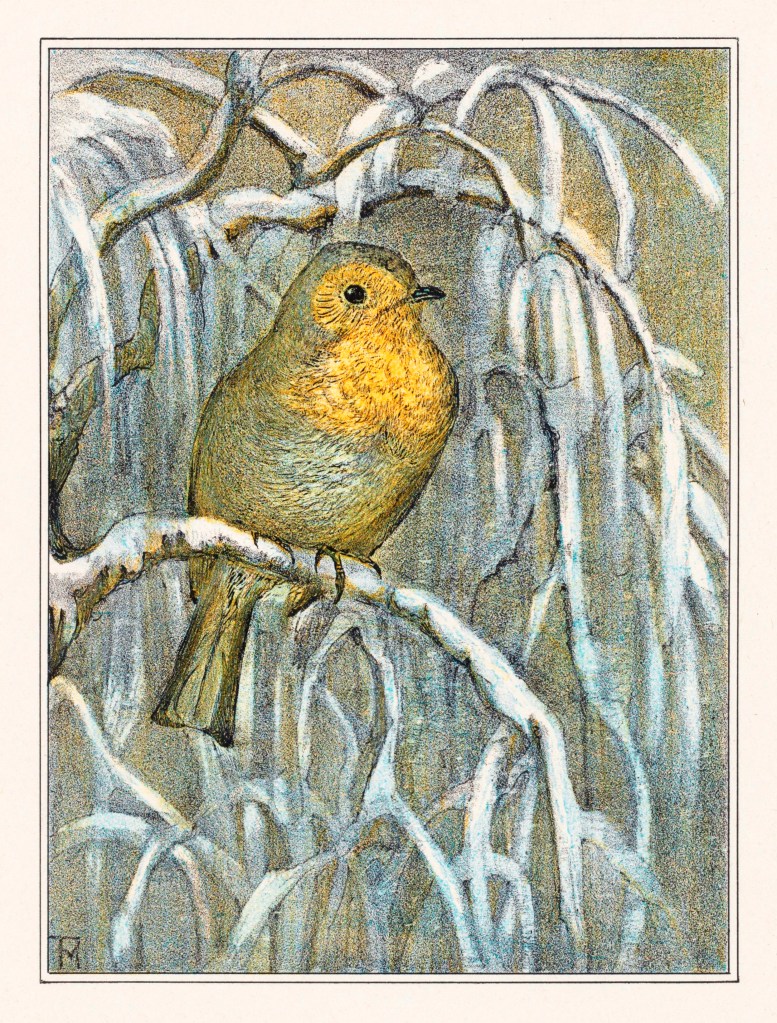
the robin and the snow and the robin’s song again underscored


Commentary by Hifsa Ashraf:

When I read this poem in one go, I feel as if an old vinyl record is playing on a loop, with slight pauses between the music that are almost imperceptible. It is a profound monoku in which the poet sketches a winter scene for us—a season of deep silence, where snow and cold weather often keep people indoors. Yet, winter is also a season of reflection, allowing us to connect more deeply with our inner selves and with nature. Since snow is a familiar part of winter in many regions of the world, connecting one’s emotions with it feels both natural and profound.

The opening word, ‘the’, makes me think of a particular robin. It may be a bird enjoying itself in the snow, or perhaps its song carries a note of sadness or loneliness. Symbolically, I also see the robin as a person seeking solace in nature in whatever way they can. Is the robin connected to deeply personal feelings that resurface each winter? Is it an old longing or desire that has quietly endured over the years and now emerges again in this season? The snow in the background plays an important role in highlighting these thoughts, emotions, moods, and desires. It also evokes a sense of nostalgia—something that keeps returning with the arrival of winter.

‘The snow’, likewise, may represent the familiar qualities associated with winter: silence, loneliness, emptiness, and stillness. Yet, I also see it as a kind of white noise, something vast and difficult to fully grasp. In this sense, the robin and the snow create a yin-yang relationship, complementing and defining one another.

The repetition of and in italics, though less emphasized, together with the recurring presence of the robin and the snow, creates an interesting rhythmic effect in the background. It emphasizes both elements and encourages readers to view them not as separate images but as parts of a unified experience.

The real cut, for me, occurs at ‘again’. The word suggests continuity—something returning time and again, whether through the cycle of the seasons or through recurring personal memories. It is as though the robin’s song repeatedly resurfaces within the snowy landscape. Perhaps it is something a solitary person longs for in winter: a sound that breaks the silence and resonates with their feelings. The song inspires one to join nature’s chorus and find comfort within it. It becomes something impossible to ignore amid the quiet fall of snow.

The haiku concludes with the word ‘underscored’, which shifts our attention from the surface imagery to the deeper music beneath it. Besides the robin’s song and the silence of the snow, there is a hidden harmony created by their interaction. The robin gives voice to the snow, while the snow, in turn, amplifies the robin’s song. The ending carries a subtle melancholy that invites us to reflect on our relationship with nature regardless of the season. At the same time, it offers hope, showing us how silence itself can become a symphony, even when no one else is there to hear it.

The repeated sounds of r, s, o, and n further enhance the musical quality of the monoku, creating a melody that readers can almost hear as they move through the poem.


wintergreen that time spent as Christmas alone


Commentary by Jacob D. Salzer:

It is remarkable how certain scents can transport us back in time to a specific memory (or a collection of memories), in a specific place and circumstance.  In this monoku, the word “alone” could have at least two different interpretations: 1) it could mean that the wintergreen scent is only smelled on Christmas Day with family and/or friends, or 2) Christmas Day was spent alone without the company of family and/or friends. This monoku makes me think of elderly people who live in assisted living homes, memory care facilities, or hospice facilities who may not have family nearby. Although the person referenced in this monoku could also be young and alone for many different reasons. Did the person get stranded in a snowstorm?  Did they experience a tragedy or a flight delay? Did they want to spend Christmas with family but their family members passed away? Does this scent bring back memories when the person celebrated Christmas with family but can no longer do this anymore?  

I also think of a beautiful forest. Perhaps the person spent Christmas in the woods for the first time.

I also appreciate how this monoku shows a disruption in our day-to-day lives, where the Christmas holiday is celebrated (hopefully beyond the capitalist mindset of gifts and money exchange), and where actual relationships are made and nourished beyond the idea of money.

Regardless of our interpretations, it is the wintergreen scent that is remembered, viscerally felt, and re-experienced in this monoku. Perhaps this scent brings a mix of emotions all at once (melancholy, joy, nostalgia, etc.). The wintergreen scent is also strong and powerful (and therefore hard to forget), which (in my mind) translates to strong emotional correlations. What other scents do we recognize, and where do they take us? What mental impressions (samskaras) remain in the subconscious mind from this lifetime (and even past lives) that are associated with various scents? This is a powerful monoku to experience and contemplate.


a single gate faces the forest snow-hinting sky


Commentary by Ron Scully:

Why “a single gate” rather than a double, or another, open or closed? Alan Summers shows deftly the doors, read gate, are one way, one off, and we are stopped by the stand of thick forest, rather than forest bathing, we are on the brink of snow bathing. Quite the piquant piece by a master. Several readings would yield richer reactions.


self-penned obituary again the snow


Commentary by Nicholas Klacsanzky:

Though this monoku is extremely concise, there are at least three ways of reading it. My first interpretation was that the poet, or another person in the poet’s life, is writing an obituary for themselves again, and this act is represented in, or connected to, the snow falling outside. The second look made me think that snow itself might be the obituary that is penned, and that the poet feels (or felt) one with snow; the snow could be falling after the obituary has been read, signifying that nature continues without indifference or reverence. Finally, on the third reading, I saw that a self-penned obituary is perhaps being compared to snowflakes, where variety is present at a focused level, but from far away, it might appear the same.

In any way you read this one-line haiku, the kigo, or seasonal reference, of snow is important. It expresses the mood, the cold, and sometimes the beauty of impending death. Snow can also be a metaphor for the blank page, or erasure. It also adds a layer of sound with “s” that matches the beginning with “self.” Perhaps it is representative of the cycle of life and death. In addition, the “o” sounds in “obituary” and “snow” provide an open feeling as if the person in the poem is welcoming death and ready for it.

The cut to form the two parts of the haiku is felt naturally after either “obituary” or “again.” The word “again” acts as a pivot that can give meaning to both the first and second parts of the haiku.

There is a lot of feeling behind the words and phrasing in this monoku. Not a word or image is out of place. An impactful haiku that calls us to pause and introspect about our relationship with nature, death, and identity.

Publications:

“the robin” previously published in whiptail: journal of the single-line poem, ed. Kat Lehmann & Robin Smith (November 2025)

“a single gate” previously published in haikuKATHA 52 (January 2026) Founder/Managing Editor: Kala Ramesh

“self-penned obituary” previously published in whiptail: journal of the single-line poem, ed. Kat Lehmann & Robin Smith (November 2025)

Roodborstje op besneeuwde boomtak (1878–1910) print in high resolution by Theo van Hoytema. Original from The Rijksmuseum. Digitally enhanced by rawpixel.

Haiku by Jeff Streeby, Richa Sharma, and Luke Levi

On the Jefferson River
one swallow’s perch song
making a summer


Jeff Streeby (USA)
Part of a haibun titled “A Brindle Bull.” Published in Bacopa Literary Review, September 2019; won Bacopa Literary Review’s Mixed Form Prize in 2019; nominated for a Pushcart Prize; reprinted in January 2020 by Contemporary Haibun Online.

Commentary by Nicholas Klacsanzky:

The Jefferson River grounds the poem in a historically significant place. It was named by the Lewis and Clark expedition in 1805 in honor of President Thomas Jefferson because it carried the largest volume of water at the time compared to the nearby Madison and Gallatin rivers. The river also carves through the dramatic Jefferson Canyon near Cardwell, which is also home to the famous Lewis and Clark Caverns State Park.

In juxtaposition to this important river is a swallow perched and singing, bringing the present into focus. The poet’s choice of one swallow instead of many makes the haiku more centered in the moment. Swallows are birds of motion, being aerial acrobats and migratory. To witness one perched and singing is to recognize a pause in perpetual movement. This corresponds to the river, which is constantly flowing. The swallow, unlike the river, takes a moment to provide a song that could be perceived as a celebration or initiation of summer. It is almost as if the swallow is saying, “River, I know you will not stop, so I will stop for you and sing your glories.”

The final line makes the seasonal reference or kigo clear. “making a summer” is where the poem diverges from simple observation. A single swallow, as perceived by the poet, creates an embodiment of summer with its song. It echoes the Zen notion that perception and reality arise together. Summer is often a time of joy, and I feel the poet is comparing this season’s emotions to the history of the Jefferson River, embodied in the swallow’s song.

Though the haiku lacks a cut marker (kireji) to separate its two parts, a comma is intuitively felt after the first line. There is no real need for punctuation to be added.

The pacing is in the traditional English-language haiku format of short/long/short lines, which approximates the rhythm of Japanese haiku. The brevity and minimalistic language of the poem matches haiku tradition. The poet could easily make this haiku verbose but rightly did not.

Looking at the sound, the contrast between the soft “o” sounds and the harder “r” sounds brings musicality to the haiku. Swallows have a “twitter-warble” song during courtship and egg-laying, with a series of continuous warbling sounds followed by rapid, mechanical-sounding whirrs. These sounds could be reflected in the letter “r” used throughout the haiku.

This is a haiku that merges the past and the present, flow and pause, and the miniscule and grandiose with great effectiveness.

bird by bird
I dismantle
the birdcage


Richa Sharma (India)
published in folk ku journal, issue 3, 2024

Commentary by Jacob D. Salzer

I appreciate this haiku for its metaphorical value. What is the birdcage? The limited thoughts/beliefs we have on a myriad of subjects seem to create a mental birdcage. The birdcage could also represent a limited worldview or mental prison that is self-created and/or imposed by others. What would happen if the mental birdcage was dismantled? Would our inner birds then truly begin to sing and fly?

This haiku reminds me of the four questions that Byron Katie offers regarding any thought or belief that someone is struggling with: 1) Is that thought true? 2) Can you absolutely know that the thought is true? 3) How do you react when you believe that thought? 4) Who would you be without the thought? Byron Katie then asks her clients to explore “turnarounds” or what are potential opposites of the thought that we believed was true. This process of inquiry can be highly enlightening as we learn to see and experience life without limited thoughts/beliefs that may not even be true to begin with. I highly recommend her book Loving What Is.

In terms of sound, the “b” sound is predominant throughout this haiku, which seems to make the word “dismantle” stand out even more. I think dismantle is a powerful word. I had not seen this word in a haiku before, until now. I think it works great in this poem. What else can we dismantle to live more loving and joyful lives? What can we let go of to walk lighter and with more ease and less suffering?

Aside from the metaphorical power of this haiku, it can also be read literally (i.e., the poet saw birds and heard the beauty of birdsongs, to such an extent that he physically took apart his birdcage). This haiku might also spark conversations about animals and birds in the zoo. In addition, this haiku brings to mind a famous poem by Maya Angelou, “Caged Bird.”

This is a powerful haiku that borders on surrealism (and perhaps folklore) but is also accessible with deep psychological meaning and modern-day relevance.

river rope
swinging into
no thoughts 


Luke Levi (USA)
published in Frogpond, 48:2, 2025 

Commentary by Hifsa Ashraf:

The phrase “river rope” immediately draws attention with its unusual pairing and the soft repetition of the ‘r’ sound. Without punctuation, the opening remains open-ended, inviting readers to imagine the river and the rope in their own way. Is the river calm or rushing? What kind of rope is it? What time of day is it? The poet leaves space for multiple interpretations.

“swinging into” introduces a gentle rhythmic movement—the pull, sway, and faint sound of the rope in the air.

The final line, “no thoughts,” turns the poem inward. Rather than presenting a concrete image, it leaves us in a meditative stillness, suggesting a mind emptied by the simple act of watching the rope swing. Everything else in the scene seems on hold around that quiet or subtle motion.

The absence of punctuation and a clear kigo further deepens the haiku’s openness and mystery.

Robert S. Duncanson – Meeting by the River (1864)

Haiku and haibun by Gareth Nurden, Sathya Venkatesh, and Anthony Lusardi

civil twilight
around the old parish
the halogen glow of snow

Gareth Nurden (Wales)

Commentary by Nicholas Klacsanzky:

What initially got me interested in this haiku was the first line, “civil twilight.” I had to look it up, and found out that it means “the brightest of the three twilight phases, occurring when the sun is between the horizon and 6° below the horizon. It provides enough natural light for most outdoor activities, often making artificial lighting unnecessary. It begins in the morning before sunrise and ends in the evening after sunset” (National Weather Service). I never saw this kigo being used, and I was impressed by its sense of sound. The running of “i” and “l” through the line makes it sing.

The second line further sets the scene and serves as a pivot between the first and third lines. The lack of punctuation helps this pivot succeed. The word “parish” is wonderful in its specificity, while “old” adds to the “l” sound in the first line and creates a contrast of times.

Though the first line introduced the time of day, the last line features the season: winter. This supplies a direct comparison between the state of the parish and the stark season it now inhabits. The word “halogen” is a brilliant touch, not just from an imagistic standpoint but also from a mood perspective. The radioactive glow of halogen is reminiscent of war, industry, science, and more. However, the take that stuck with me is the relation to the aftermath of war. The old parish is most likely in ruin (physically or metaphorically), and the halogen of snow magnifies this fact. The snow and twilight did not intend to illustrate the old parish’s wrecked state, but it did in the poet’s eyes, and maybe in the eyes of others around. On another note, the third line keeps with “l” and “o” sounds that blend musically with the second line, and some of the first line.

The relationship between civil twilight and the halogen glow of snow creates toriawase, or a skillful combination of different elements. Though both of these parts are of nature, the old parish brings in a human and spiritual element. This adds another layer to the toriawase.

This haiku is understated and unfolds with meaning with each line and word. It brings in time, seasons, and the connection between human architecture and spirituality with the natural world. It is a contemplative work that delivers through excellent diction, imagery, and phrasing.

red alert
the umbrella seller sits back
to enjoy his tea


Sathya Venkatesh (India)
published in haikuKATHA, issue #44, 2025

Commentary by Hifsa Ashraf:

The haiku presents a striking shift in mood, moving from danger or urgency to quiet ease. The opening line, “red alert,” signals danger or impending disruption, immediately creating tension and uncertainty. Without punctuation, it allows readers to imagine various interpretations, the most common ones maybe a storm, heavy rain, or another natural calamity.

The second line introduces an umbrella seller that subtly hinting at the nature of the alert. Umbrellas suggest rain or rain related disasters. Yet instead of reacting with alarm, the seller seems to be relaxed, creating a contrast between the urgency and the utter relaxation.

In the final line, “to enjoy his tea,” there is a quiet sense of ease, even a hint of enjoyment. The umbrella seller appears untroubled, suggesting that what brings concern to some may offer opportunity or simply remain an ordinary moment to others.

The overall imagery can be read as revealing a colder, more self-interested side of human nature, where one benefits from circumstances that may trouble many. At the same time, the haiku remains open to multiple interpretations and invites the reader to consider both its subtle implications and its silences.

A haibun:

while reading ryokan’s poetry

i thought about the annual christmas parade in boonton, new jersey. held right after black friday on main street with fire trucks and floats for every local business. the high school marching band, the politicians, the VFWs, the church choirs, the boy and girl scouts and all the neighbors lining up and down the road, taking selfies and tossing confetti with the first falling snow. and if i was his pupil, i would try to convince ryokan to join me in the festivities . . . yet i would imagine, he would convince me to join him near the rockaway river, right near its small falls, far away from all activities and ask me to just listen.

                        late autumn moon;
                        eventually the town sleeps
                        but never the river

Anthony Lusardi (USA)
first published in failed haiku, issue #111, September 2025

Commentary by Jacob D. Salzer

This is an intriguing haibun where modern culture collides with Nature. The parade and modern culture also contrast with the monastic life of a Japanese poet, calligrapher, and Zen Buddhist priest, Ryōkan, who lived in the 18th and 19th centuries. The annual Christmas parade is loud and full of bright colors, sounds, and music, flashing phone cameras, confetti, etc. The parade is happening after Black Friday, when people buy things that day at discounted prices, but it can also involve physical violence and be dangerous. This kind of stimulation at the parade and during Black Friday can easily activate the human sympathetic nervous system (fight, flight, or freeze).

By contrast, the life of Ryōkan is strongly aligned with the beauty of Nature, without loud sounds or other excessive multisensory stimulation. The atmosphere of his life in Nature easily activates our parasympathetic nervous system (rest and digest), where we can relax, while being fully alert and present.

In this haibun, a powerful example of the collision between two worlds is “tossing confetti with the first falling snow.” With Ryōkan’s life and perspective in mind, perhaps the poet is ultimately starting to see modern culture as a kind of distraction that has established traditions, but are ultimately short-lived, while our true home is found in Nature and a quiet mind.

According to Britannica: “Ryōkan (born 1758, Izumozaki, Japan—died Feb. 18, 1831, Echigo province) was a Zen Buddhist priest of the late Tokugawa period (1603–1867) who was renowned as a poet and calligrapher. The eldest son of a village headman, he became a Buddhist priest at about the age of 17 under the religious name of Taigu Ryōkan. When he was 21 he met an itinerant monk, Kokusen, and followed him to his temple, Entsū-ji, at Tamashima, Bitchū province. He followed a life of monastic discipline there for 12 years. After Kokusen’s death he traveled to various parts of Japan as a mendicant priest. In old age he returned to his native Echigo province, where he studied the Man’yōshū and ancient calligraphy. He developed a strong master-pupil relationship with a young nun, Teishin, who after his death compiled Hachisu no tsuyu (1835; “Dew on the Lotus”), a collection of his haiku and waka poems. He also executed many pieces of calligraphy that are esteemed for their elegant beauty.”

Interestingly, there is no capitalization found in this haibun, aside from VFW’s (which I learned means Veterans of Foreign Wars, which is an organization representing U.S. veterans who have served in overseas conflicts). The lowercase words in this haibun seem to create a tone of humility.

In short, this is an intriguing haibun that offers social commentary on modern culture and the importance of being in Nature. It also provides a small window into the life of Ryōkan and Zen Buddhism. Despite our technological advances, cities will rise and fall with time, but Nature will remain. A powerful haibun.

Old Church Tower at Nuenen, 1884, Vincent van Gogh