
We have a special feature this time around. Here are several commentaries on one-line haiku from Alan Summers’ new book, modŏ – new & selected.
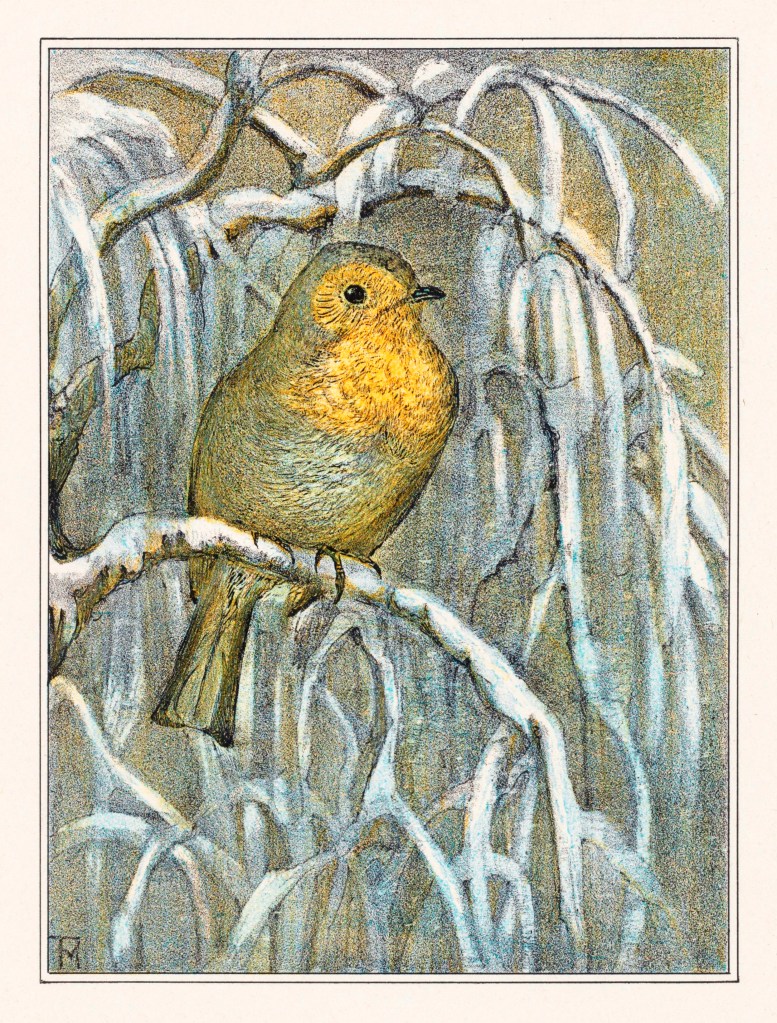
the robin and the snow and the robin’s song again underscored
Commentary by Hifsa Ashraf:
When I read this poem in one go, I feel as if an old vinyl record is playing on a loop, with slight pauses between the music that are almost imperceptible. It is a profound monoku in which the poet sketches a winter scene for us—a season of deep silence, where snow and cold weather often keep people indoors. Yet, winter is also a season of reflection, allowing us to connect more deeply with our inner selves and with nature. Since snow is a familiar part of winter in many regions of the world, connecting one’s emotions with it feels both natural and profound.
The opening word, ‘the’, makes me think of a particular robin. It may be a bird enjoying itself in the snow, or perhaps its song carries a note of sadness or loneliness. Symbolically, I also see the robin as a person seeking solace in nature in whatever way they can. Is the robin connected to deeply personal feelings that resurface each winter? Is it an old longing or desire that has quietly endured over the years and now emerges again in this season? The snow in the background plays an important role in highlighting these thoughts, emotions, moods, and desires. It also evokes a sense of nostalgia—something that keeps returning with the arrival of winter.
‘The snow’, likewise, may represent the familiar qualities associated with winter: silence, loneliness, emptiness, and stillness. Yet, I also see it as a kind of white noise, something vast and difficult to fully grasp. In this sense, the robin and the snow create a yin-yang relationship, complementing and defining one another.
The repetition of and in italics, though less emphasized, together with the recurring presence of the robin and the snow, creates an interesting rhythmic effect in the background. It emphasizes both elements and encourages readers to view them not as separate images but as parts of a unified experience.
The real cut, for me, occurs at ‘again’. The word suggests continuity—something returning time and again, whether through the cycle of the seasons or through recurring personal memories. It is as though the robin’s song repeatedly resurfaces within the snowy landscape. Perhaps it is something a solitary person longs for in winter: a sound that breaks the silence and resonates with their feelings. The song inspires one to join nature’s chorus and find comfort within it. It becomes something impossible to ignore amid the quiet fall of snow.
The haiku concludes with the word ‘underscored’, which shifts our attention from the surface imagery to the deeper music beneath it. Besides the robin’s song and the silence of the snow, there is a hidden harmony created by their interaction. The robin gives voice to the snow, while the snow, in turn, amplifies the robin’s song. The ending carries a subtle melancholy that invites us to reflect on our relationship with nature regardless of the season. At the same time, it offers hope, showing us how silence itself can become a symphony, even when no one else is there to hear it.
The repeated sounds of r, s, o, and n further enhance the musical quality of the monoku, creating a melody that readers can almost hear as they move through the poem.
wintergreen that time spent as Christmas alone
Commentary by Jacob D. Salzer:
It is remarkable how certain scents can transport us back in time to a specific memory (or a collection of memories), in a specific place and circumstance. In this monoku, the word “alone” could have at least two different interpretations: 1) it could mean that the wintergreen scent is only smelled on Christmas Day with family and/or friends, or 2) Christmas Day was spent alone without the company of family and/or friends. This monoku makes me think of elderly people who live in assisted living homes, memory care facilities, or hospice facilities who may not have family nearby. Although the person referenced in this monoku could also be young and alone for many different reasons. Did the person get stranded in a snowstorm? Did they experience a tragedy or a flight delay? Did they want to spend Christmas with family but their family members passed away? Does this scent bring back memories when the person celebrated Christmas with family but can no longer do this anymore?
I also think of a beautiful forest. Perhaps the person spent Christmas in the woods for the first time.
I also appreciate how this monoku shows a disruption in our day-to-day lives, where the Christmas holiday is celebrated (hopefully beyond the capitalist mindset of gifts and money exchange), and where actual relationships are made and nourished beyond the idea of money.
Regardless of our interpretations, it is the wintergreen scent that is remembered, viscerally felt, and re-experienced in this monoku. Perhaps this scent brings a mix of emotions all at once (melancholy, joy, nostalgia, etc.). The wintergreen scent is also strong and powerful (and therefore hard to forget), which (in my mind) translates to strong emotional correlations. What other scents do we recognize, and where do they take us? What mental impressions (samskaras) remain in the subconscious mind from this lifetime (and even past lives) that are associated with various scents? This is a powerful monoku to experience and contemplate.
a single gate faces the forest snow-hinting sky
Commentary by Ron Scully:
Why “a single gate” rather than a double, or another, open or closed? Alan Summers shows deftly the doors, read gate, are one way, one off, and we are stopped by the stand of thick forest, rather than forest bathing, we are on the brink of snow bathing. Quite the piquant piece by a master. Several readings would yield richer reactions.
self-penned obituary again the snow
Commentary by Nicholas Klacsanzky:
Though this monoku is extremely concise, there are at least three ways of reading it. My first interpretation was that the poet, or another person in the poet’s life, is writing an obituary for themselves again, and this act is represented in, or connected to, the snow falling outside. The second look made me think that snow itself might be the obituary that is penned, and that the poet feels (or felt) one with snow; the snow could be falling after the obituary has been read, signifying that nature continues without indifference or reverence. Finally, on the third reading, I saw that a self-penned obituary is perhaps being compared to snowflakes, where variety is present at a focused level, but from far away, it might appear the same.
In any way you read this one-line haiku, the kigo, or seasonal reference, of snow is important. It expresses the mood, the cold, and sometimes the beauty of impending death. Snow can also be a metaphor for the blank page, or erasure. It also adds a layer of sound with “s” that matches the beginning with “self.” Perhaps it is representative of the cycle of life and death. In addition, the “o” sounds in “obituary” and “snow” provide an open feeling as if the person in the poem is welcoming death and ready for it.
The cut to form the two parts of the haiku is felt naturally after either “obituary” or “again.” The word “again” acts as a pivot that can give meaning to both the first and second parts of the haiku.
There is a lot of feeling behind the words and phrasing in this monoku. Not a word or image is out of place. An impactful haiku that calls us to pause and introspect about our relationship with nature, death, and identity.
Publications:
“the robin” previously published in whiptail: journal of the single-line poem, ed. Kat Lehmann & Robin Smith (November 2025)
“a single gate” previously published in haikuKATHA 52 (January 2026) Founder/Managing Editor: Kala Ramesh
“self-penned obituary” previously published in whiptail: journal of the single-line poem, ed. Kat Lehmann & Robin Smith (November 2025)
 Haiku Commentary
Dear Hifsa,
Thank you so much for your thoughtful commentary on my first monostich haiku here.
I’ll be reading the others again now!
Alan
LikeLiked by 2 people
It’s a free PDF download, scroll down to the end of Call of the Page homepage and a short bio if you are not familiar with myself and my work: https://www.callofthepage.org
LikeLiked by 3 people
Dear Jacob,
Thank you!
It’s a mixture of one strange Christmas alone, before I met Karen, and one Christmas when I was just starting to know her, before we transitioned to friends, and then much more. Christmas (not the commercial side, though as children it blurs) holds a special time for me. I’m extra sensitive if it can’t be shared and without any big financial worries.
It’s a mixture of spiritual non-religious, and personal, and sense of duty (various jobs, some dangerous, some a mix of fun and responsibility as a Mall Santa supporting some families who faced tough times the previous time with lost ones or ones in hospital).
I didn’t want to put all the complexities into the poem.
It’s also remembering how fortunate I am, and others are not. And yes, wintergreen, a time of the season for us, and post-bloom… by Autumn, these pollinated flowers develop into the iconic bright red wintergreen berries that persist through the cold months.
Thank you again.
LikeLiked by 2 people
Many thanks Ron Scully
a single gate faces the forest snow-hinting sky
“Why “a single gate” rather than a double, or another, open or closed?”
This was the single gate to a large field directly in front of the. guest bedroom of my brother and sister in laws! A lovely view to wake up to. Whether foggy or snow-flecked, the field leads up to woodland where bluebells lurk. The different seasons offer different treasures.
I’ve always been fascinated by variations on “doorways” possibly as I read The Narnia Chronicles at a very young age, so that many things act as an entrance to other lands and imagination.
I regularly enter that stand of thick forest, often with the two now-elderly rescued Lurchers. Not so much forest-bathing as a mix of folklore, myth, mysterious noises that left myself, one of the Lurchers, and my brother-in-law very puzzled indeed.
The prelude to snow via sky tone is fascinating whether morning, later in the day or at dusk:
a flink of cows the blue before a night of falling snow
Alan Summers
Blithe Spirit (2014)
Twelve cows are a flink.
I love your phrases!!!
“we are on the brink of snow bathing.”
Thank you for your kind words!
Alan
LikeLiked by 2 people
re:
self-penned obituary again the snow
pub. whiptail: journal of the single-line poem, ed. Kat Lehmann & Robin Smith (November 2025)
Commentary by Nicholas Klacsanzky
Nick said:
“Though this monoku is extremely concise, there are at least three ways of reading it.”
“My first interpretation was that the poet, or another person in the poet’s life, is writing an obituary for themselves again, and this act is represented in, or connected to, the snow falling outside.”
Snow falling is such a potent force, and visual, it’s the start of the blank sheet.
It makes urbanicity look beautiful, a blank page we don’t need to fill with words.
If there are any words, they are tucked up inside. Will they ever make the page?
“The second look made me think that snow itself might be the obituary that is penned, and that the poet feels (or felt) one with snow; the snow could be falling after the obituary has been read, signifying that nature continues without indifference or reverence.”
Snow is like an obituary, it’s a restarter, which is why old and older recognitions, through need, are celebrated, even in several different ways, beyond any religion.
We need to start again at the end, if we don’t we embrace staleness of act and thought and generosity as well as our creativity. Every being can be creative.
I do feel one with the snow, ever since as a child when I opened the front door to our small house, and there was another door, one of snow, one door holding up another door. I remember walking to school on my own, crossing a field thigh-deep in snow, and felt at home.
“Finally, on the third reading, I saw that a self-penned obituary is perhaps being compared to snowflakes, where variety is present at a focused level, but from far away, it might appear the same.”
That’s a great observation!
Each piece of snow is distinct, as we all are too. We just need to zoom in as much as zoom out to know that.
“In any way you read this one-line haiku, the kigo, or seasonal reference, of snow is important. It expresses the mood, the cold, and sometimes the beauty of impending death.”
So many films make use of snow as symbolism of course, as does Blade Runner 2049, with realisation of our mortality and how we meet that.
“Snow can also be a metaphor for the blank page, or erasure. It also adds a layer of sound with “s” that matches the beginning with “self.” Perhaps it is representative of the cycle of life and death. In addition, the “o” sounds in “obituary” and “snow” provide an open feeling as if the person in the poem is welcoming death and ready for it.”
The blank page or screen is both a friend and opportunity, and a perceived foe or nemesis. We have to rise up to meet it, to greet it, and to avoid that in any way as unthinkable if creativity is our chrysopoeia, our making gold out of base metals (metaphorically).
“The cut to form the two parts of the haiku is felt naturally after either “obituary” or “again.” The word “again” acts as a pivot that can give meaning to both the first and second parts of the haiku.”
self-penned obituary again the snow
So much is ‘again’. We start a new day again, we break our fast (shortened to breakfast) again, leave our home again, hope to make it back home again at the end of a working day. Everything is again, we repeat, we hope again, in terrible times that feel worse day by day. It’s also a luxury to have an ‘again’ as so many do not have that.
“There is a lot of feeling behind the words and phrasing in this monoku. Not a word or image is out of place. An impactful haiku that calls us to pause and introspect about our relationship with nature, death, and identity.”
Never before, it seems, in countries that have appeared stable, but things through politics, and undeniable fierce climate changes, experiencing it this second retail refrigeration is failing for chilled and frozen food supplies. There are no famous last words as they get repeated, there are only some kinds of ‘again’ that are guaranteed. It’s time to choose which ‘again’ we are willing to support.
Me? I want peace over military actions, I want passionate never violent political discussion in our social places, and I want those fridges and freezers to be working again in supermarkets. Again, I want that blank sheet and whatever it brings.
Alan
LikeLiked by 1 person
Thank you for your response and your insights. Blade Runner is one of my favorite films, and I never thought of the use of snow in film in that way before. I am an amateur film buff, and I will look at snow differently after your discussion.
LikeLiked by 1 person
A lovely set by Alan, thank you for bringing these together and commenting on them.
LikeLiked by 2 people
I was shocked, in a funny way, when one woman, not a man, suggested something else that never occurred to me despite Gene Murtha!
It’s about facing up to fear as a writer and not procrastinating before we draw our last breath. A bit like A Christmas Carol but the main character is a writer and visited by the ghosts of three other writers.
LikeLiked by 1 person